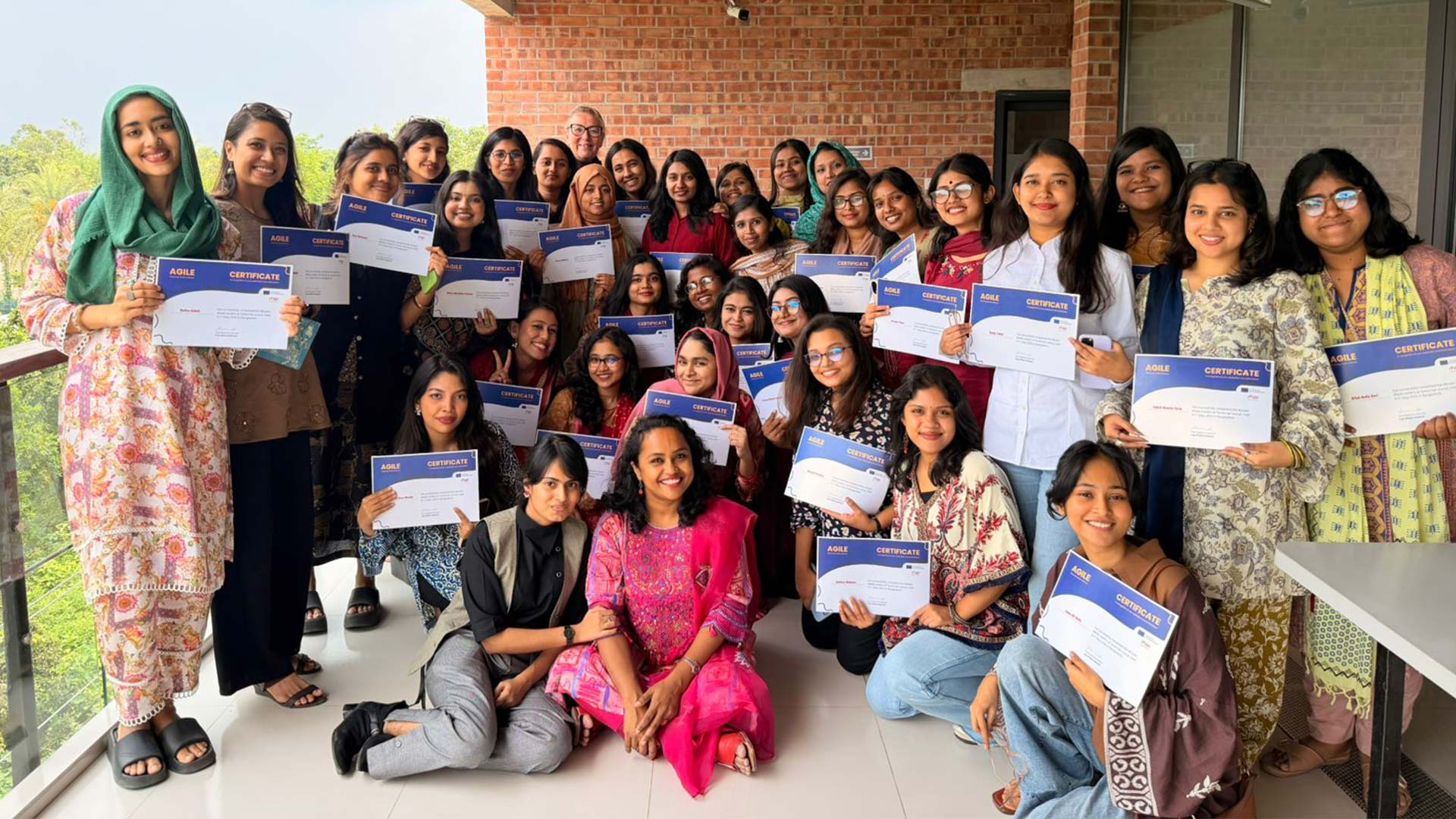
Thirty-two female students from four leading journalism and communication universities in Bangladesh successfully completed a three-day intensive leadership training programme aimed at preparing the next generation of women media leaders in the country. The training, organised under the AGILE project’s Women Media Leaders of Tomorrow (WMLT) initiative, was conducted by Fojo Media Institute in collaboration with the Communication and Journalism Educators Network (CJEN Bangladesh), with support from the European Union. The workshop took place from May 9–11 at Gonokollan Trust (GKT), Manikganj.
Participants represented four universities from across Bangladesh: University of Dhaka, University of Rajshahi, Independent University, Bangladesh, and University of Barishal. Faculty representatives accompanying the students included Dilshad Hossain Dodul (Independent University, Bangladesh), Naziat Choudhury (University of Rajshahi), Kajalie Shehreen Islam (University of Dhaka), and Md. Forhad Uddin (University of Barishal).
Moving beyond conventional classroom teaching, the programme adopted an immersive, practical, and experience-based learning approach to strengthen participants’ understanding of leadership in journalism and media. Sessions focused on self-leadership, identifying role models, building motivation, and navigating the realities of a demanding media environment where professional pressures and unequal working conditions remain significant challenges for women journalists.
Participants explored the professional journey from entering the media industry as young journalists to becoming effective newsroom leaders. Discussions highlighted the important distinction between being a supervisor or manager and being a transformative leader capable of fostering inclusive and ethical newsroom cultures. The sessions were facilitated by an accomplished team of mentors and media professionals, including Kersti Forsberg, Jesmin Papri, Nazia Afrin, Fahim Ahmed, Tanvir Mahmoud, and Moriem Aziz Mourin.
A major component of the programme addressed journalist safety and professional resilience, particularly in relation to workplace harassment, intimidation, and field-based risks faced by women journalists. Drawing from resources such as the WAN-IFRA Sexual Harassment Handbook, mentors guided participants on how to identify, document, and respond to harassment and abuse within newsrooms and during field reporting. The sessions strongly emphasized that harassment and abuse should never be normalized within the profession and highlighted the legal, institutional, and professional mechanisms available for support and protection. The programme concluded with a reflective discussion on the future of women in Bangladeshi journalism, underscoring the importance of mentorship, solidarity, professional networks, and supportive newsroom cultures in overcoming barriers to leadership and professional advancement.
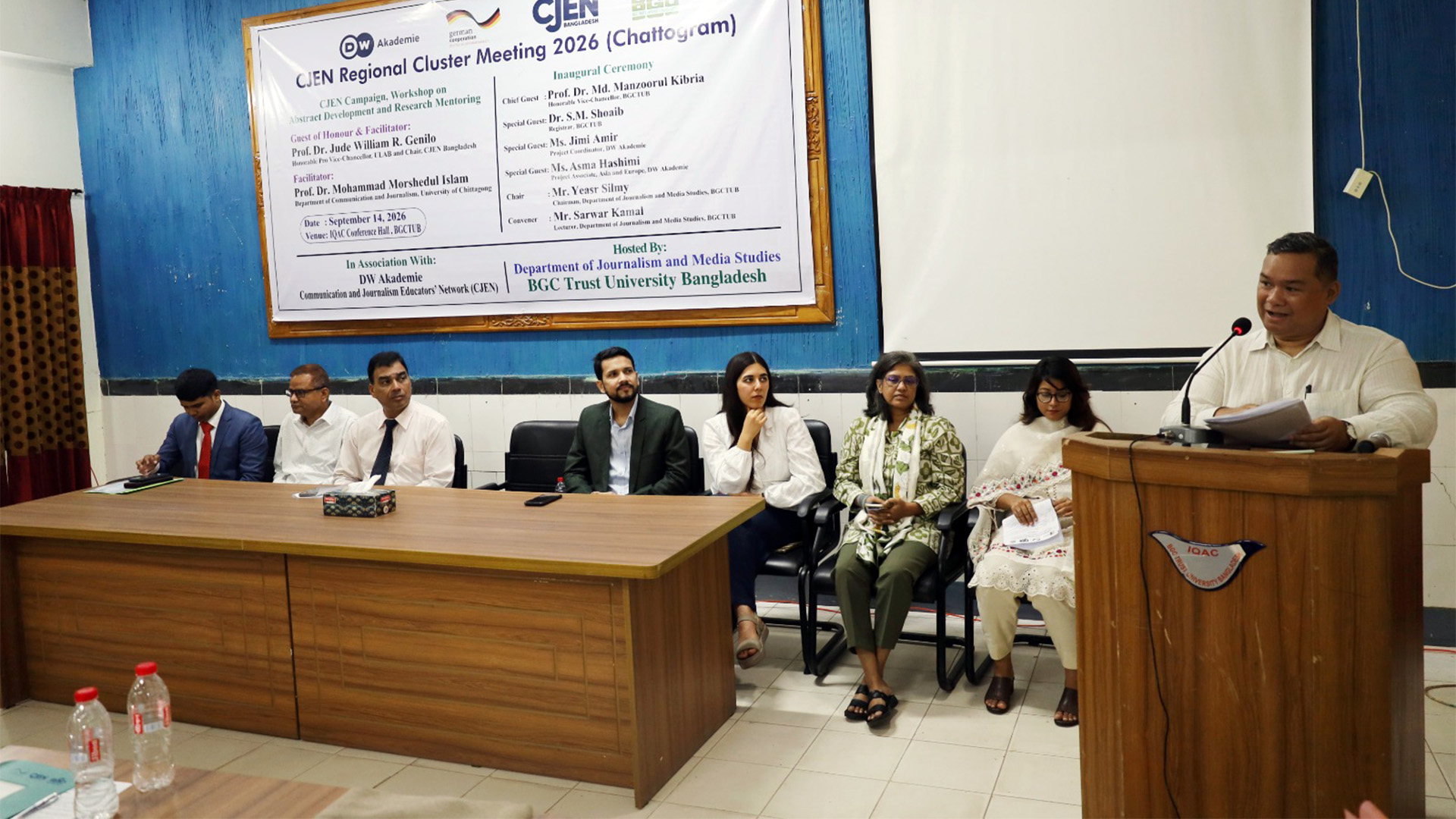
Prof. Jude William Genilo also graced the occasion and spoke about the role of Bangladesh Communication and Journalism Educators Network (CJEN Bangladesh) in strengthening journalism and communication education in the country. He highlighted CJEN Bangladesh’s commitment to fostering collaboration among educators, supporting ethical and inclusive journalism education, promoting professional development opportunities for students and faculty, and building stronger connections between academia and the media industry.
About AGILE
AGILE Consortium is a global consortium initiative (2025–2028) supported by the European Union and aimed at strengthening independent journalism worldwide. Consortium members include Internews Europe, Fojo Media Institute, CFI Développement Médias, Thomson Media, and ARTICLE 19. Within the consortium, Fojo Media Institute leads Workstream 5 on “The Future of Journalism.”